

The Quiet Value of Patience
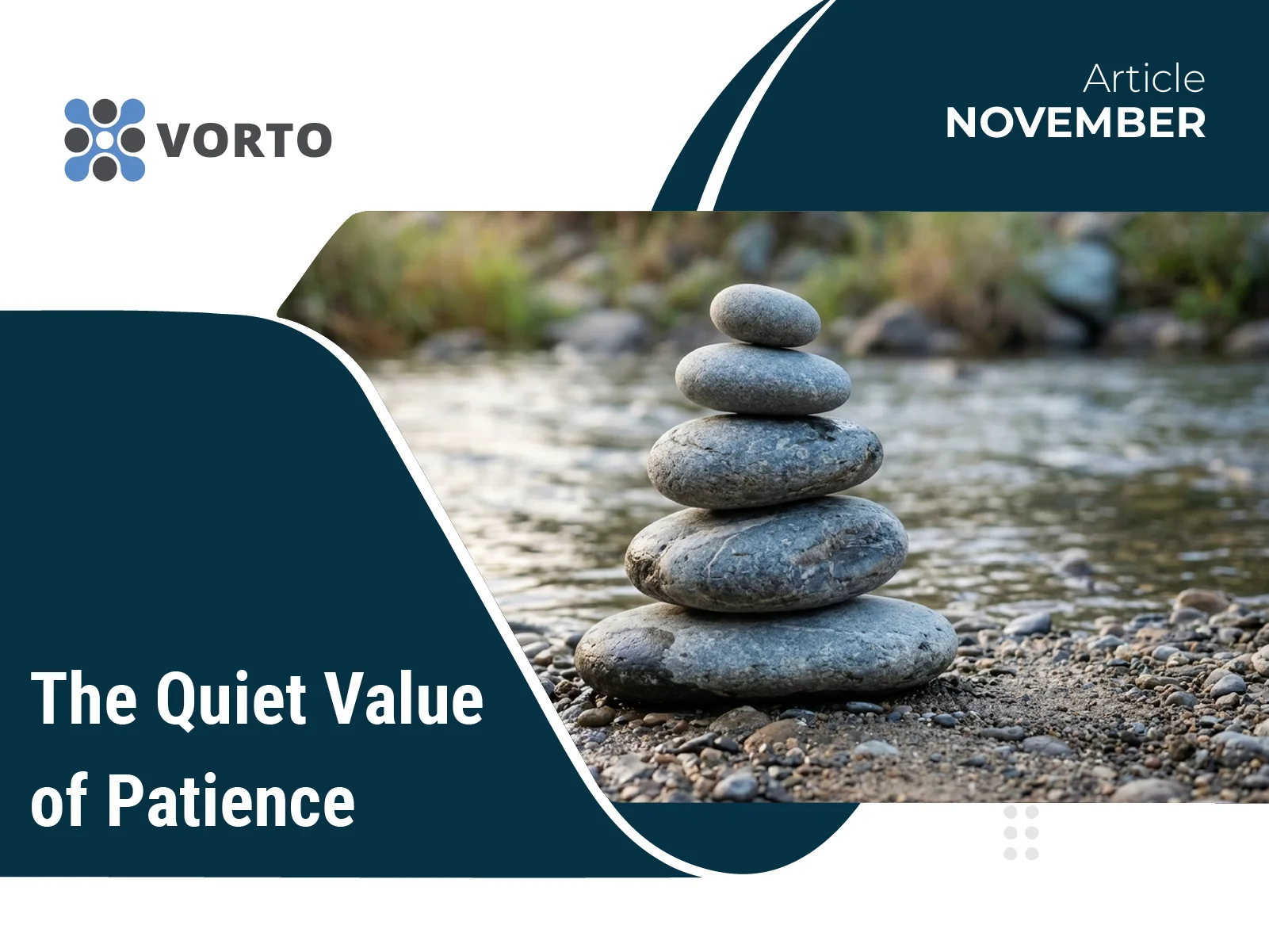
We live in a world that rewards speed. Messages arrive instantly and expect a reply just as fast. Success stories are told as if they happened overnight, and progress is measured in days rather than years. It is easy to absorb the idea that if something isn't working quickly, it isn't working at all.
Yet almost everything worth having is built slowly. Patience is rarely celebrated, because it is quiet by nature. It doesn't announce itself or produce dramatic moments. But it sits underneath most of the achievements we admire, doing its work long before anyone notices.
Everything Wants to Be Instant
Impatience rarely looks like impatience. More often it looks like decisiveness, ambition or simply keeping busy. It shows up when we abandon a plan after a few weeks because the results haven't arrived yet. It shows up when we chase the quick win over the lasting one, or switch direction the moment something feels slow.
It also shows up in how we judge our own progress. We compare the early stages of our work with the finished results of others, and conclude we are falling behind. We rush decisions just to feel movement, even when waiting a little longer would have led to a better one. None of this feels reckless in the moment. It feels like getting on with things. But over time, it means many good ideas are dropped just before they would have started to pay off.
Before It Looks Like It's Working
Think about the things people genuinely admire: a strong reputation, real expertise, loyal relationships, a business that has stood for decades. Not one of them can be rushed. Each is the product of time, built from countless small actions that seemed unremarkable when they happened.
The difficulty is that this kind of growth is mostly invisible at first. A tree spends years developing its roots before it grows tall. Trust is earned through many quiet moments of reliability before anyone would describe you as trustworthy. Skill is built through hours of practice that look, from the outside, like very little is happening.
This is the stretch where most people give up. Not because the approach is wrong, but because the results haven't caught up with the effort yet. Patience is what carries you through that gap, between doing the work and seeing it pay off.
Waiting Is Not the Same Thing
It would be easy to mistake patience for sitting back and hoping for the best. But waiting and patience are very different. Waiting is passive. It hands control to circumstance and simply hopes things improve. Patience is active. It means continuing to show up, refine and commit, without demanding an immediate return.
Think of a potter shaping clay. The process can't be hurried, since pushing too hard or too fast collapses the work. But the potter is never idle. Every turn of the wheel is deliberate, guided by attention and skill. That is what patience looks like in practice: steady effort combined with the judgement to let things develop at their own pace.
Patience also means knowing when not to act. Some situations improve with time, more information or a cooler head. Holding back from a hasty reply, a rushed hire or a reactive decision isn't weakness. Often, it is simply good judgement.
Staying When Others Leave
There is a simple reason patience is such a powerful advantage: most people don't have much of it. When results are slow, many quietly move on to the next idea, the next plan or the next shortcut. The field thins out long before the finish line.
That means those willing to stay the course often succeed not because they are more talented, but because they are still there. They gave their work enough time to compound, and their relationships enough time to deepen. They let their reputation build one reliable moment at a time.
None of this makes patience easy. It asks us to trust a process when the evidence is still thin, and to keep going when it would be more comfortable to stop. But in a world that is always in a hurry, the ability to wait well, while still working, is rare. And what is rare tends to be valuable.
The next time something feels slow, it may be worth asking a different question. Not "why isn't this working yet?" but "have I given it enough time to work?"
The clever way to send currency. Empowering businesses with smart financial solutions since 2016. Your trusted partner for international commerce.
Quick Links
Get Started
Ready to revolutionise your business finances?
Follow us:
Copyright © 2026. All rights reserved.