

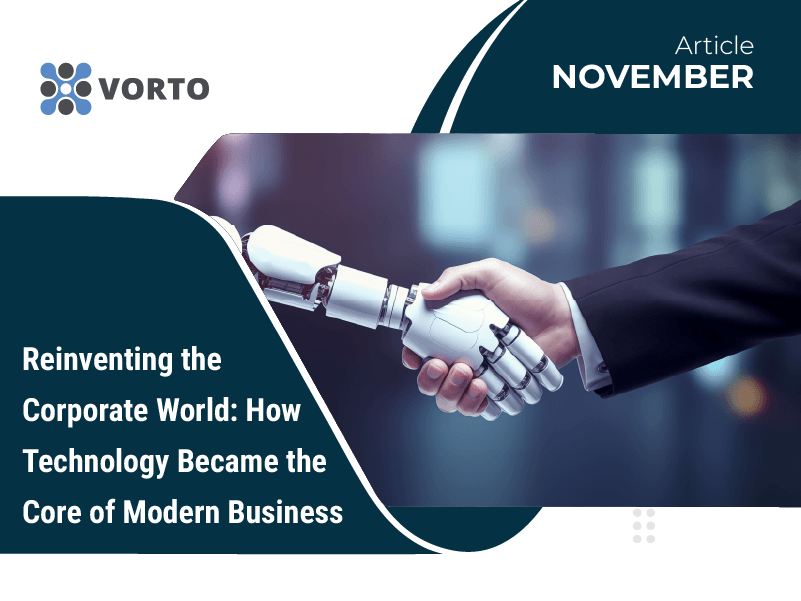
Reinventing the Corporate World: How Technology Became the Core of Modern Business
There was a time when technology was simply a supporting act, a tool to streamline processes and keep communication flowing. Today, it has become the very foundation of how companies operate, compete, and grow. In the modern corporate world, technology isn’t just part of the business; it is the business.
From Support System to Strategic Engine
Only a couple of decades ago, IT departments focused on keeping systems running, managing hardware, and maintaining internal networks. But as digital capabilities expanded, so did their impact. The emergence of cloud computing, mobile connectivity, and data analytics transformed technology from a utility into a strategic asset.
Now, corporate strategy and technology are inseparable. Whether it’s analyzing performance through real-time dashboards, optimizing logistics through automation, or engaging customers through AI-powered platforms, the digital layer has become the central nervous system of every enterprise.
How Technology Shapes the Modern Corporation
In today’s corporate world, technology influences every dimension of organizational success:
- Strategy : Data analytics and predictive modeling guide decision-making and identify new market opportunities.
- Culture : Collaboration tools and digital workspaces build transparency, connectivity, and flexibility across teams.
- Operations : Automation and process optimization improve efficiency, accuracy, and scalability.
- Customer Experience : Seamless digital interactions define how clients perceive and trust a brand.
Every department, from finance to HR to marketing, now relies on digital platforms that generate insights and streamline execution. The result is a more connected, intelligent, and responsive corporate environment.
New Skills for a New Era
As technology takes center stage, the modern workforce must evolve with it. Digital literacy is no longer optional; it’s a baseline expectation. Corporate leaders must understand not just business fundamentals, but also how data, automation, and AI influence their strategy.
At every level, adaptability and continuous learning are now the most valuable professional traits. The companies that thrive are those that empower their people to embrace change, experiment, and collaborate across traditional boundaries.
Navigating the Growing Pains
Of course, this rapid evolution isn’t without challenges. With every new platform comes new complexity. Data privacy, cybersecurity, and digital fatigue have become pressing concerns. Managing multiple systems can lead to fragmentation rather than efficiency if not aligned under a cohesive strategy.
The key for corporations is to approach technology with clarity and purpose, investing in tools that enhance, not overwhelm, their core mission. Digital transformation must serve people, not the other way around.
The Future: A Living Digital Ecosystem
Looking ahead, technology will continue to evolve from being a tool to becoming a partner, one capable of anticipating needs, providing real-time insights, and learning from patterns. Artificial intelligence, automation, and connected systems will make corporate operations more proactive than reactive.
The next generation of successful companies will be those that view technology as a living ecosystem, dynamic, adaptive, and deeply human in its application. In this new world, innovation isn’t just a department; it’s a mindset that runs through every process, product, and person.
In the end, the modern corporate world isn’t defined by technology alone, but by how intelligently and responsibly we use it. The true reinvention lies not in the machines we build, but in the smarter, more connected ways we work together through them.